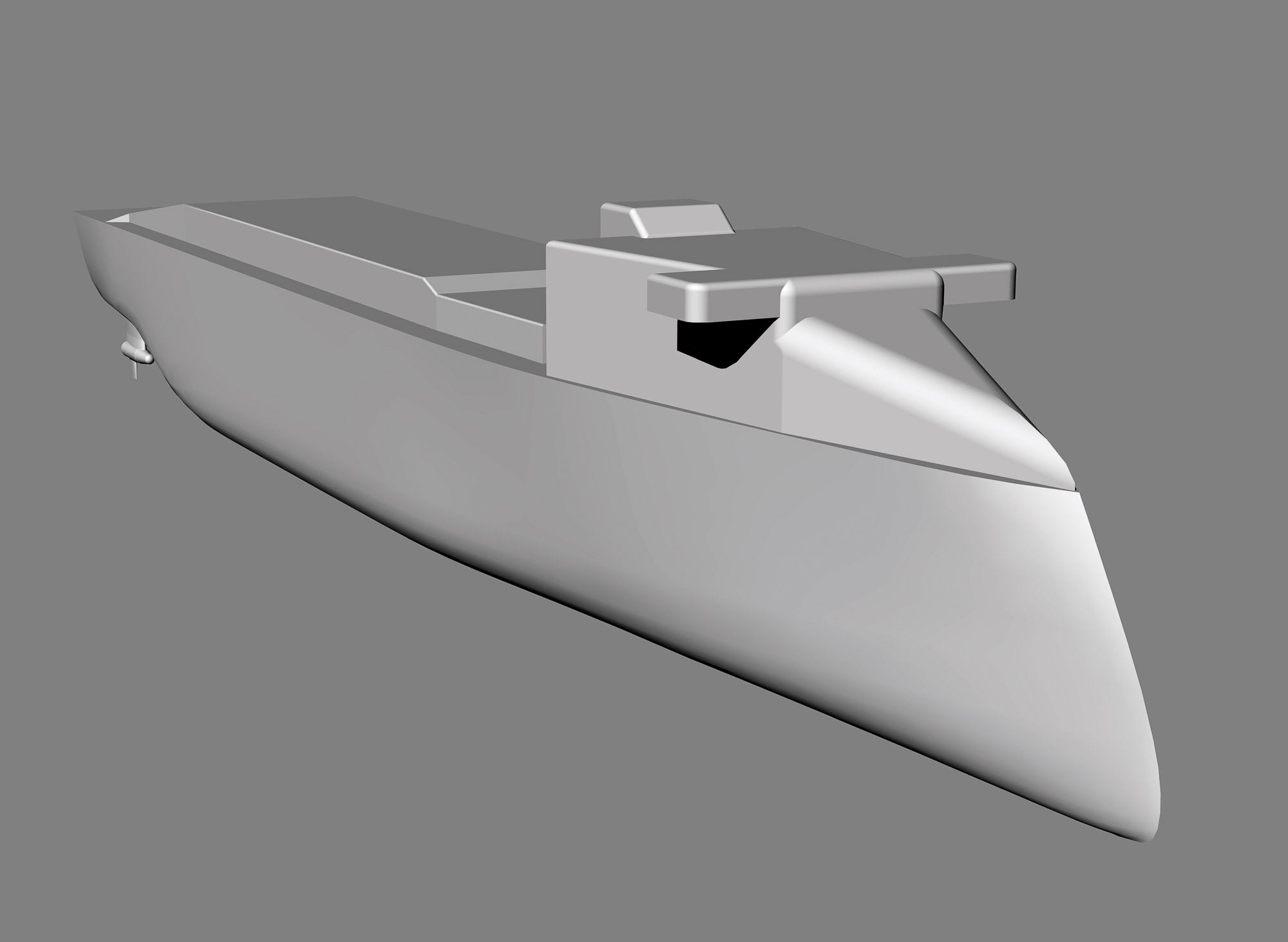
This project covers the design and analysis of a high speed Liquid Natural Gas (LNG) distribution vessel. A brief initial study was completed into the historic use of boil off gas as a fuel, and the speeds achievable therein. Following this, research was done into areas of applicability for a high speed LNG carrier; concluding on a vessel forming part of a distribution network.
From here, the work was split into three groups; the core vessel design, an experiment into the effects of sloshing on boil off gas rates and an economic study of the distribution network the vessel would be applied to. The design and experiment sections consisted of a wide range of interconnecting analyses including Computational Fluid Dynamics and Finite Element Analysis, as well as hand calculations based on empirical formulae.
A complete concept design of an LNG distribution vessel was produced, comprising hull design, resistance and propulsion, seakeeping and manoeuvring analyses as well as cargo containment and structural design. Analysis and subsequent optimisation were common themes across the design section, with significant communication between design teams at all stages. The experiment concluded that sloshing increases boil off rates, especially when operating in sea states close to cargo tank natural frequencies, while the economic section concluded that high speed is applicable based on possible demand conditions. During periods of high demand, speed allows the vessel to deliver large amounts of LNG, and in periods of low demand other ports can be added to the supply route to deliver more LNG.
From here, the work was split into three groups; the core vessel design, an experiment into the effects of sloshing on boil off gas rates and an economic study of the distribution network the vessel would be applied to. The design and experiment sections consisted of a wide range of interconnecting analyses including Computational Fluid Dynamics and Finite Element Analysis, as well as hand calculations based on empirical formulae.
A complete concept design of an LNG distribution vessel was produced, comprising hull design, resistance and propulsion, seakeeping and manoeuvring analyses as well as cargo containment and structural design. Analysis and subsequent optimisation were common themes across the design section, with significant communication between design teams at all stages. The experiment concluded that sloshing increases boil off rates, especially when operating in sea states close to cargo tank natural frequencies, while the economic section concluded that high speed is applicable based on possible demand conditions. During periods of high demand, speed allows the vessel to deliver large amounts of LNG, and in periods of low demand other ports can be added to the supply route to deliver more LNG.
-
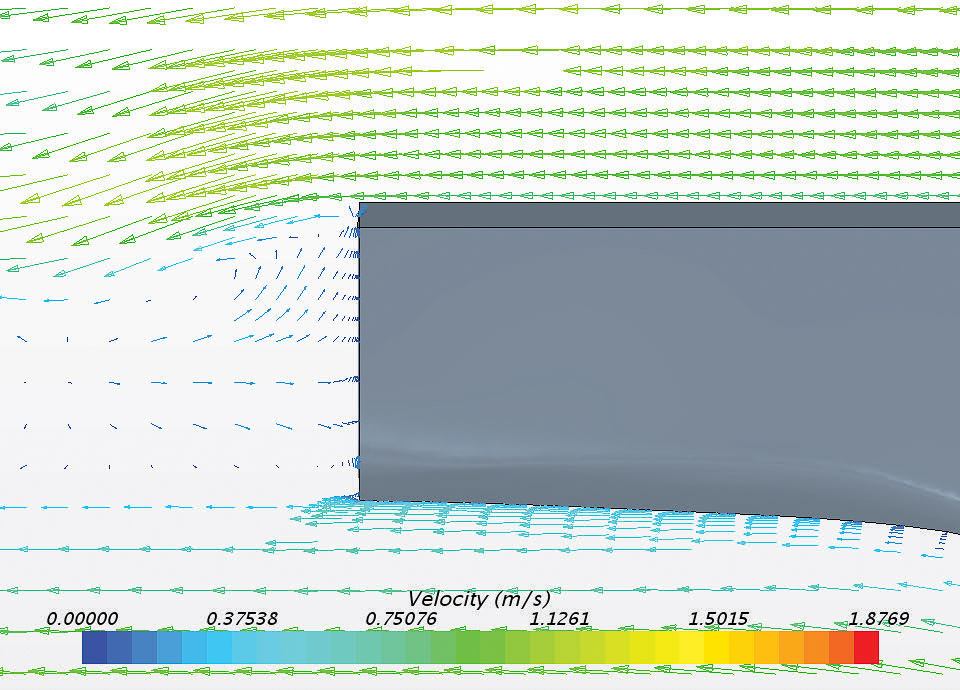
- Computational Fluid Dynamics (CFD) showing vortex shedding at the stern of the vessel
-

- Lines plan of the vessel
-

- CFD showing the free surface of the hull at sprint speed