
Canopy
Quilters Vault, High Street, Southampton
A steel framed canopy primarily designed to enclose the existing medieval structures and shelter them from the effects of weathering. The structure also aims to increase public interest and cultural focus towards these important archaeological structures within the city wide context.
The proposed structural design results from the consideration of the building’s street context (scale, proportion and massing), programmatic requirements (access, circulation and function), site characteristics, structural and material performance, and the construction process.
The external shell of the building staggers in plan and steps in height to establish an exterior mass suitable to its streetscape and to create inspiring volumes internally. These formal shifts provide locations for an entrance and exit and allow for significant glazed openings that maximise the use of natural light. The pitched roof effectively drains rainwater and further breaks down the mass of the building.
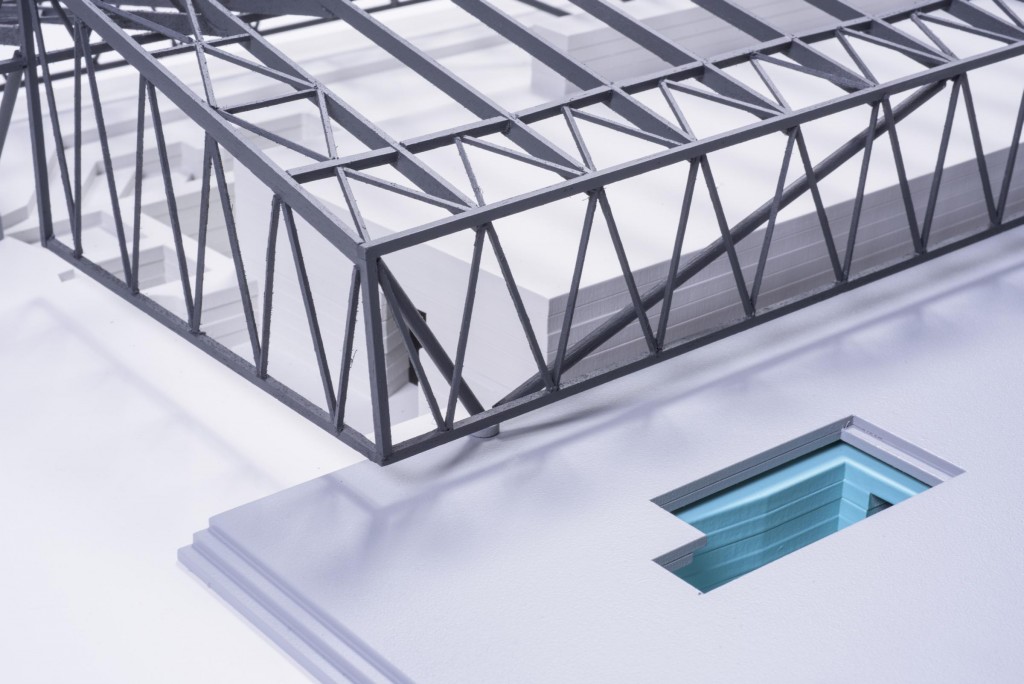
The complexity of the site ground model dominated the location and development of the inclined struts that provide vertical support to the roof structure and provide overall lateral stability. Trusses and bracing elements support spans, provide stiffness and characterise the appearance of the canopy structure. Piles, ground beams, thrust blocks and spanning slabs are used to provide stable foundations that avoid placing load on the existing structures during the lifetime of the building.
The building is clad with horizontal louvers that allow air to freely flow through and for the support structure to be seen as integral to the appearance of the building. The facades are further animated when illuminated at night time. The elevations are hung and stop short the surrounding street surface to emphasise the insertion of a modern structure and the retention of the historic fabric.
Quilters Vault, High Street, Southampton
A steel framed canopy primarily designed to enclose the existing medieval structures and shelter them from the effects of weathering. The structure also aims to increase public interest and cultural focus towards these important archaeological structures within the city wide context.
The proposed structural design results from the consideration of the building’s street context (scale, proportion and massing), programmatic requirements (access, circulation and function), site characteristics, structural and material performance, and the construction process.
The external shell of the building staggers in plan and steps in height to establish an exterior mass suitable to its streetscape and to create inspiring volumes internally. These formal shifts provide locations for an entrance and exit and allow for significant glazed openings that maximise the use of natural light. The pitched roof effectively drains rainwater and further breaks down the mass of the building.
The complexity of the site ground model dominated the location and development of the inclined struts that provide vertical support to the roof structure and provide overall lateral stability. Trusses and bracing elements support spans, provide stiffness and characterise the appearance of the canopy structure. Piles, ground beams, thrust blocks and spanning slabs are used to provide stable foundations that avoid placing load on the existing structures during the lifetime of the building.
The building is clad with horizontal louvers that allow air to freely flow through and for the support structure to be seen as integral to the appearance of the building. The facades are further animated when illuminated at night time. The elevations are hung and stop short the surrounding street surface to emphasise the insertion of a modern structure and the retention of the historic fabric.
-

- Final model

-

- Final model

-

- Final model

-

- Final model

-

- Final model
-

- Final model

-

- Final model

-

- Final model

-

- Final model

-

- Final model

-

- Drawing: Ground Floor Plan

-

- Drawing: Cross Section

-

- Drawing: Cross Section

-

- Drawing: Structural arrangement plans

-

- Drawing: Structural arrangment

-

- Drawing: Structural sections

-

- Drawing: LUSAS structural analysis
