Sustainable drainage systems (SuDS) are drainage solutions and infrastructure that ,unlike conventional systems, aim to improve water quality, biodiversity, and amenity value of an area, meanwhile controllably storing and releasing excess surface water runoff. Our project initially looked at the current legislation surrounding the issue of SuDS, and specifically the reasons why its implementation has not been enforced by law. With regard to the Flood and Water Management Act (FWMA, 2010) we uncovered a range of issues associated with adoption and maintenance of a SuDS scheme, highlighting to us the possible benefits of having single body adoption.
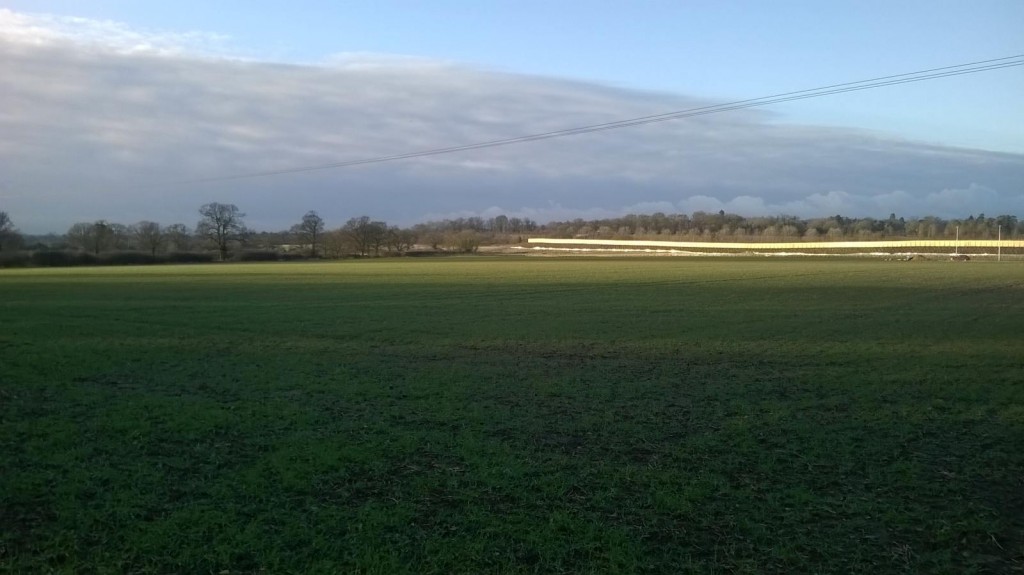
After researching the various components of SuDS and visiting a number of live sites and well established SuDS schemes, we applied our gained knowledge and understanding to a real life development site in Wokingham, with the objective of producing a design capable of adoption under a single body. A desk study and flood risk assessment highlighted the constraints and requirements associated with implementing SuDS on a new development, and provided the basis for the detailed design of two drainage strategies for the site. The first design utilises ‘grey’ SuDS features such as geocelluar crates and oversized pipes to store water below ground and resembles a more traditional drainage design and thought process of “out of sight, out of mind”. The second uses ‘green’ components including swales, retention ponds, and bio-retention areas in a SuDS treatment train to slow the conveyance of water and improve water quality. The ponds and green spaces created improve biodiversity and amenity value of the system.
Following the designs, several analysis exercises were undertaken to establish the differences in cost, maintenance requirements, constructability, and socio-ecological impacts. This provided key findings and recommendations, including: the cost of SuDS schemes is comparable to traditional drainage designs, the most suitable single adoption body may vary depending on the SuDS components used (due to the maintenance requirements), and the design of SuDS is easier if it is done in conjunction with the development layout. In order to determine the designs applicability for single body adoption, feedback on the designs was obtained from several of our sponsors (client, contractor, consultant, and sewerage undertaker) whom all have different perceptions of a systems requirements. Finally, technical and legislative recommendations were made, and future work was considered.
After researching the various components of SuDS and visiting a number of live sites and well established SuDS schemes, we applied our gained knowledge and understanding to a real life development site in Wokingham, with the objective of producing a design capable of adoption under a single body. A desk study and flood risk assessment highlighted the constraints and requirements associated with implementing SuDS on a new development, and provided the basis for the detailed design of two drainage strategies for the site. The first design utilises ‘grey’ SuDS features such as geocelluar crates and oversized pipes to store water below ground and resembles a more traditional drainage design and thought process of “out of sight, out of mind”. The second uses ‘green’ components including swales, retention ponds, and bio-retention areas in a SuDS treatment train to slow the conveyance of water and improve water quality. The ponds and green spaces created improve biodiversity and amenity value of the system.
Following the designs, several analysis exercises were undertaken to establish the differences in cost, maintenance requirements, constructability, and socio-ecological impacts. This provided key findings and recommendations, including: the cost of SuDS schemes is comparable to traditional drainage designs, the most suitable single adoption body may vary depending on the SuDS components used (due to the maintenance requirements), and the design of SuDS is easier if it is done in conjunction with the development layout. In order to determine the designs applicability for single body adoption, feedback on the designs was obtained from several of our sponsors (client, contractor, consultant, and sewerage undertaker) whom all have different perceptions of a systems requirements. Finally, technical and legislative recommendations were made, and future work was considered.