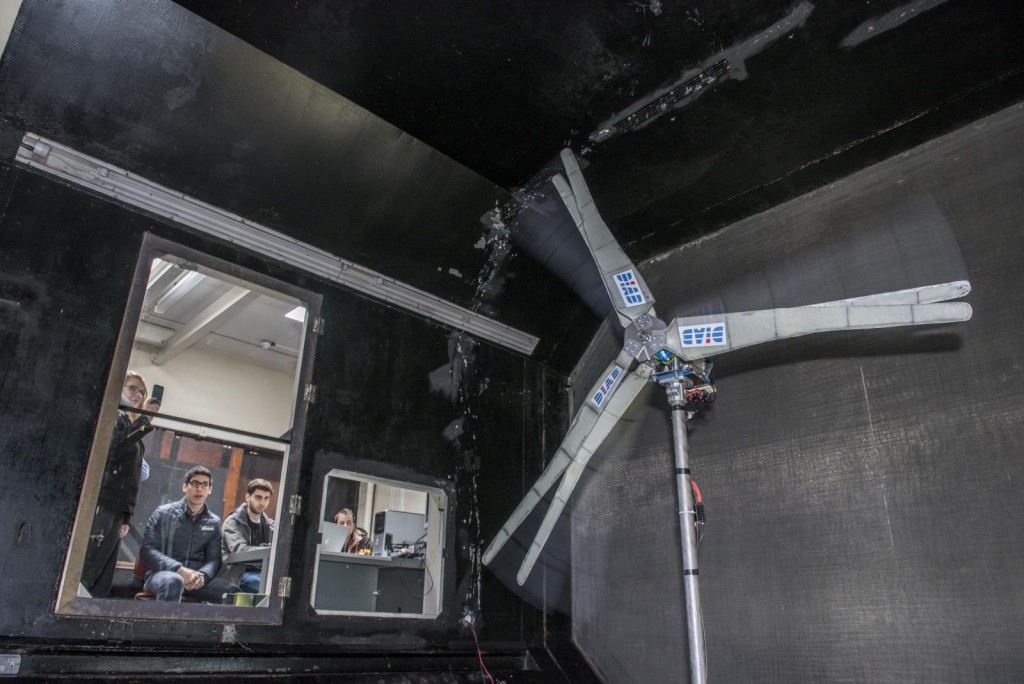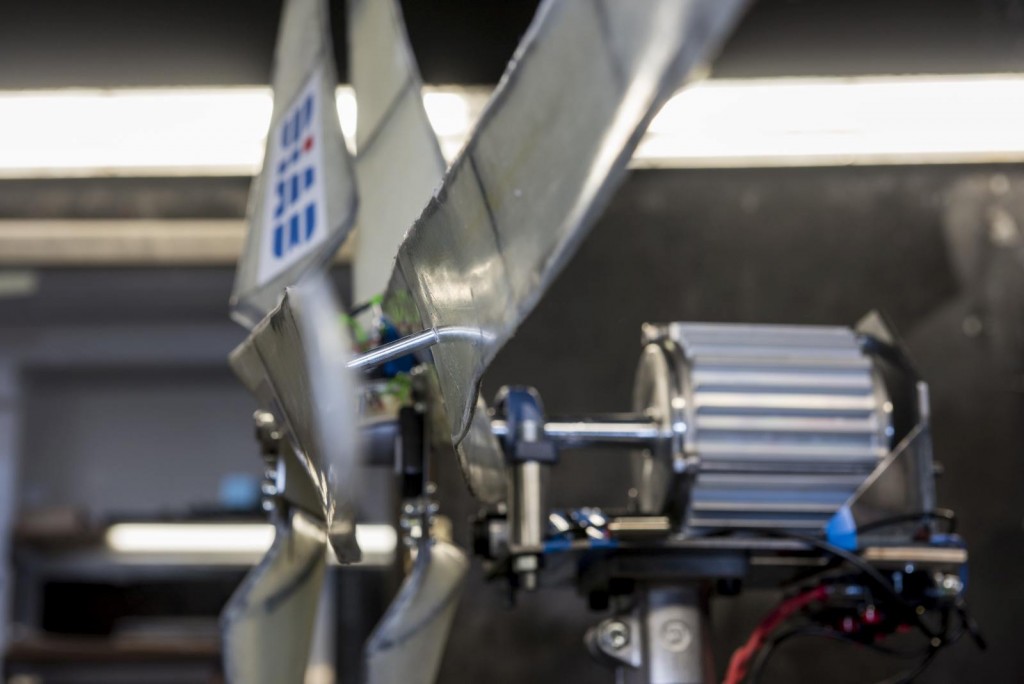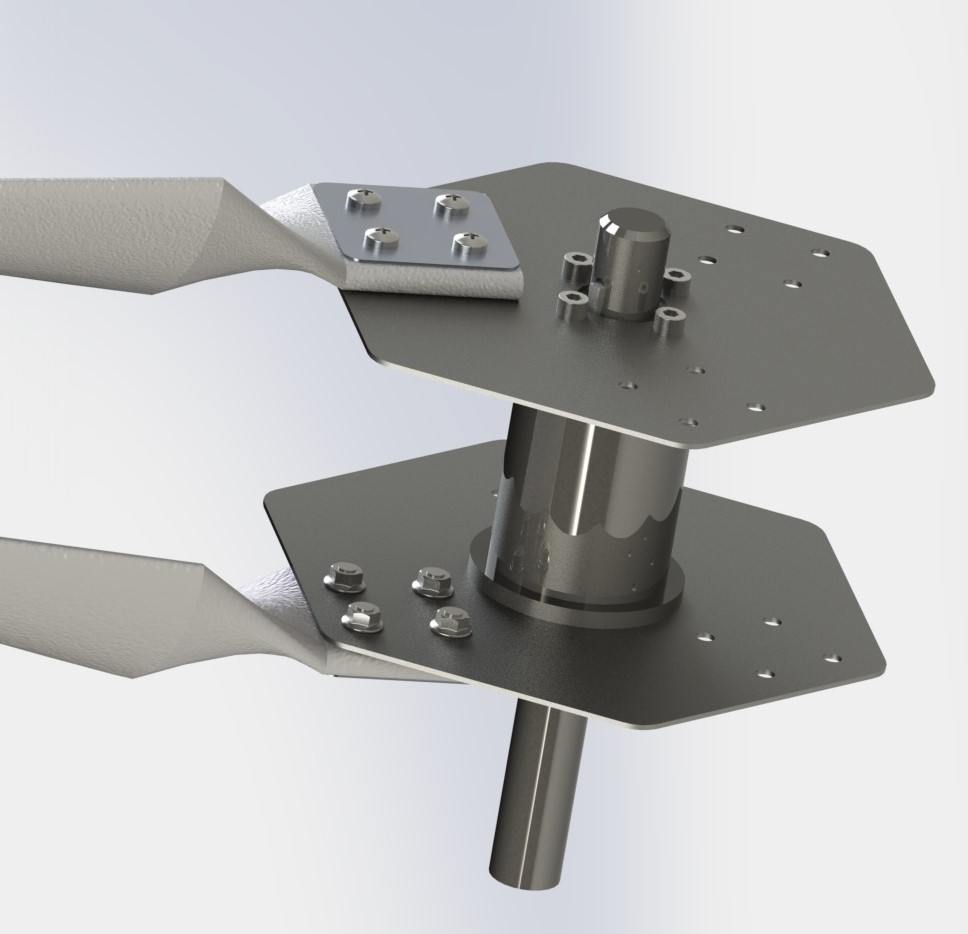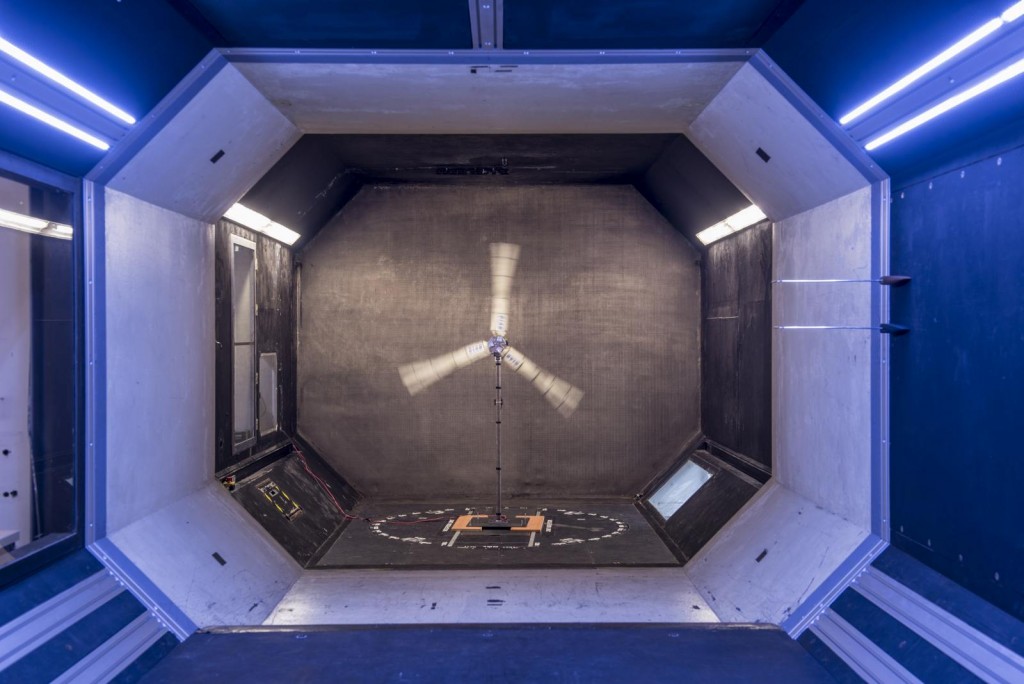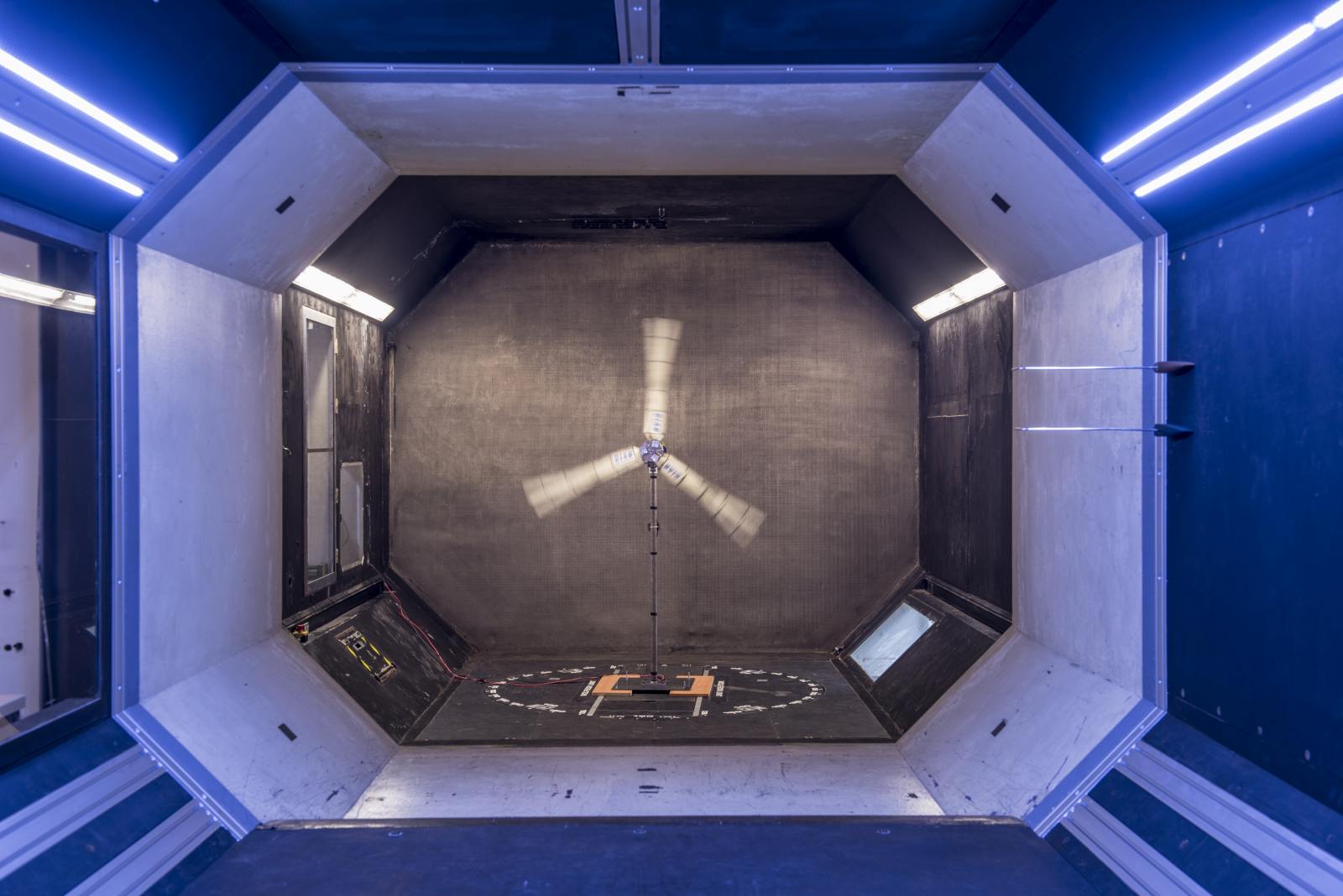
The objective of the project was to investigate the aerodynamic, structural and economic performance of a Joined Blade Rotor (JBR) wind turbine design. For this purpose a small-size prototype was designed, built and tested in the University’s wind tunnel facilities to assess its performance. The Testing and Structures Research Laboratory (TSRL) at the University of Southampton facilities were used to undertake composite construction of the wind turbine blades. Glass fibre reinforced plastic was selected as the blade material and vacuum epoxy resin infusion was used to manufacture the blades. The hub, tower and all other components of the prototype assembly were manufactured in the University’s Engineering Design and Manufacturing Centre (EDMC).
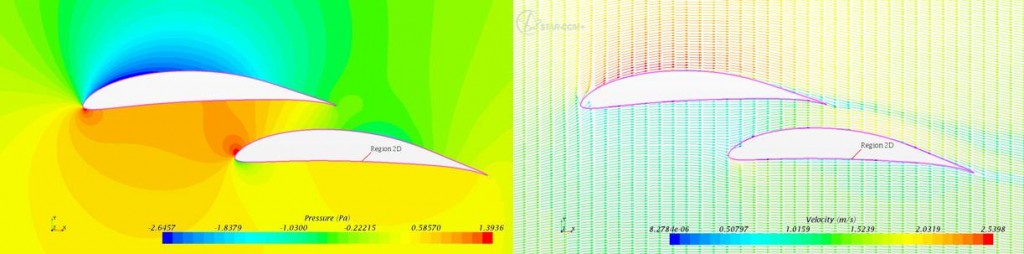
The objectives of the project involved investigation of the joined blade rotor design, through Finite Element structural and CFD aerodynamic analyses, development of a Blade Element Momentum (BEM) model to predict the design’s performance, manufacture of the prototype and completion of wind tunnel tests. Finally, a business proposal and cost of energy assessment for the development of a medium sized JBR wind turbine was carried out. The JBR wind turbine showed a 15.5% improvement in the annual energy yield and 4.85% lower Cost of Energy, when compared to a conventional commercial wind turbine.
The main problem wizth increasing the power output of modern wind turbines is the increased cost of energy. Increased power is achieved through greater diameter blades and larger structures that are associated with greater weight, loads and cost. A JBR could meet the requirements of significantly reduced mass, loads and cost combined with increased aerodynamic efficiency. The two blades are in different planes and are connected together at the blade tips using a pivot joint. The combination of the joined blade assembly and the central hub provides a redundant lattice structure that improves the stiffness and strength of the structure when subjected to torsion, flap-wise bending and edge-wise bending loads.
The aim of this project was to develop design and analysis tools that could act as a framework for optimising the joined blade rotor in the future. The group managed to successfully convert a conceptual novel idea into a working prototype and experimentally prove the aforementioned benefits of the JBR, which has the potential to revolutionise the wind turbine market.
The objectives of the project involved investigation of the joined blade rotor design, through Finite Element structural and CFD aerodynamic analyses, development of a Blade Element Momentum (BEM) model to predict the design’s performance, manufacture of the prototype and completion of wind tunnel tests. Finally, a business proposal and cost of energy assessment for the development of a medium sized JBR wind turbine was carried out. The JBR wind turbine showed a 15.5% improvement in the annual energy yield and 4.85% lower Cost of Energy, when compared to a conventional commercial wind turbine.
The main problem wizth increasing the power output of modern wind turbines is the increased cost of energy. Increased power is achieved through greater diameter blades and larger structures that are associated with greater weight, loads and cost. A JBR could meet the requirements of significantly reduced mass, loads and cost combined with increased aerodynamic efficiency. The two blades are in different planes and are connected together at the blade tips using a pivot joint. The combination of the joined blade assembly and the central hub provides a redundant lattice structure that improves the stiffness and strength of the structure when subjected to torsion, flap-wise bending and edge-wise bending loads.
The aim of this project was to develop design and analysis tools that could act as a framework for optimising the joined blade rotor in the future. The group managed to successfully convert a conceptual novel idea into a working prototype and experimentally prove the aforementioned benefits of the JBR, which has the potential to revolutionise the wind turbine market.